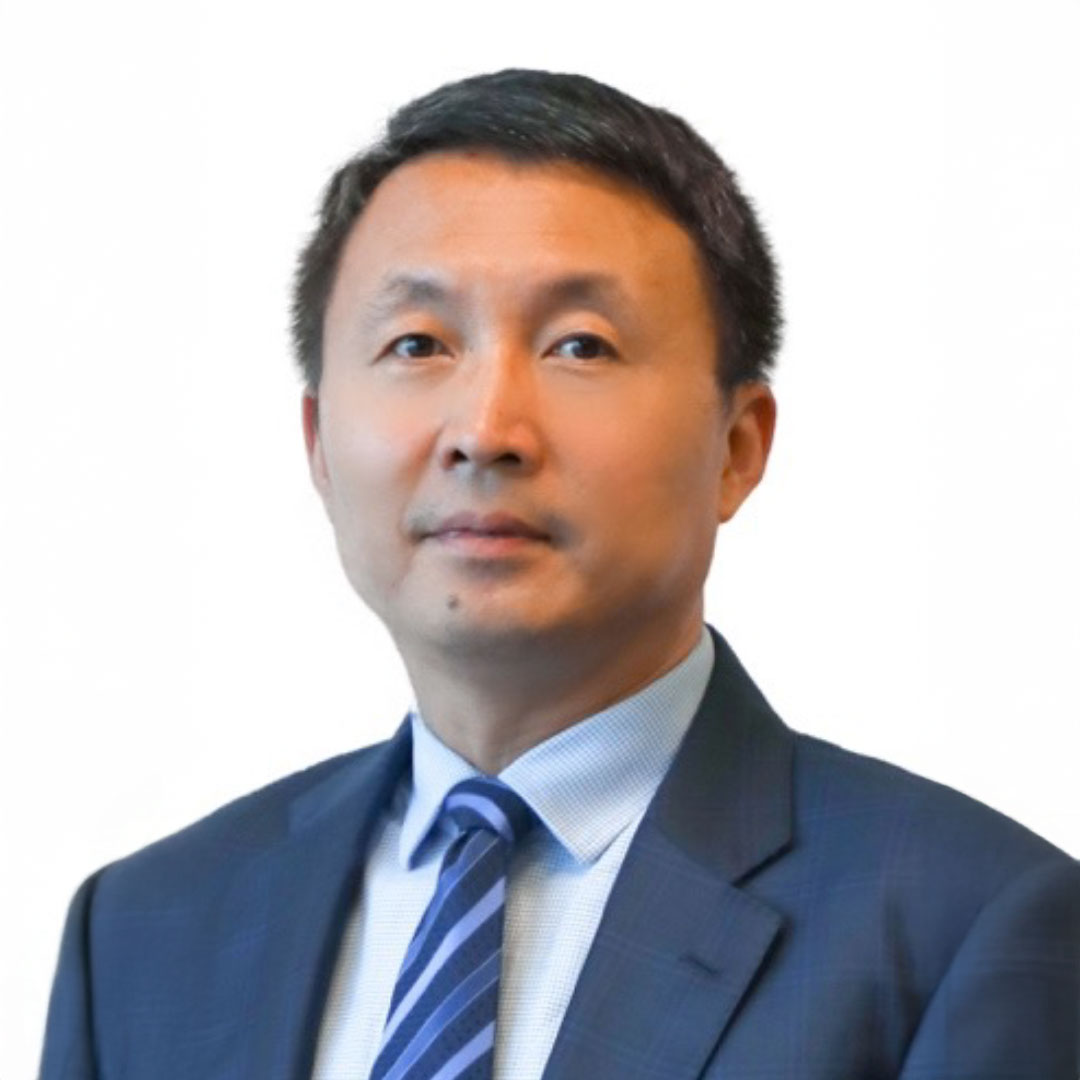
Zhanfeng Deng
Zhanfeng Deng
Talk title: Hydrogen Energy Development and Challenges in China: National Strategies and Implementation Pathways toward Carbon Neutrality
Biography
Zhanfeng Deng is Deputy Director of the Center for Fundamental and Frontier Research at Huairou National Laboratory, Director of the Hydrogen Energy Research Institute, and Principal Investigator of China’s Major National Task on Renewable Hydrogen Production. His research focuses on large-scale renewable energy integration and flexible energy utilization, through which he has delivered impactful scientific advances and substantial economic value.
He has authored nearly 100 peer-reviewed publications, holds over 200 granted patents, and has published seven monographs. His work has been recognized with nine first-class and six second-class awards at the provincial and ministerial levels. He has led dozens of major research initiatives, including projects under the National 863 Program, the National Key R&D Program, and science and technology programs of the State Grid Corporation of China.
Dr. Deng has been appointed as a National Leading Talent in Scientific and Technological Innovation and a Zhongguancun High-Level Leading Talent. He also serves as a guideline expert and member of the overall expert group for the Hydrogen Energy Special Program of the National Key R&D Program. His professional service includes Vice Chair of the Hydrogen Energy Technology Committee of the Chinese Society for Electrical Engineering; Member of the Expert Committee of the China Hydrogen Energy and Fuel Cell Innovation Strategic Alliance; Deputy Director of the State Key Laboratory of Advanced Transmission Technology; Chair of the Hydrogen Energy Storage Subcommittee of the IEEE Power & Energy Society (PES) China Technical Council; Editorial Board Member of Global Energy Interconnection; Member of the CIGRE B4.91 Standards Working Group; Secretary-General of the Flexible AC Transmission Systems (FACTS) Subcommittee of the IEEE PES Transmission and Distribution Committee (China); and Member of the Industry Standardization Technical Committee for High-Temperature Fuel Cells in the energy sector.
David Hart
David Hart
Talk title: The Winding Road to Hydrogen’s Essential Role in a Decarbonised Energy System
Biography
David Hart has spent over 30 years in the energy transition sector, from research to consulting. He specialises in the role of hydrogen in the energy system, advising governments, investors, corporations and early-stage companies on the opportunities and pitfalls in the sector. He is a successful consulting company founder, an independent advisor, has sat on investment committees and as a non-executive director, and is a Visiting Professor at Imperial College London. He set up and ran a hydrogen-focused research group at Imperial in the 1990s, and with two colleagues built sustainable energy consulting firm E4tech into a globally recognised specialist in the sector before it was acquired by international sustainability consultancy ERM, where he retains a part-time role as Global Hydrogen Lead.
Prof Hart’s work in hydrogen has included techno-economic analysis, greenhouse gas and system modelling, business strategy and market and industry landscaping, as well policy advisory and technology due diligence. He has supported the CEOs of major corporations and of early-stage companies in finding pathways through the complexity of the hydrogen ecosystem. He is a Director of the International Association of Hydrogen Energy, chaired the Grove Fuel Cell Symposium, and has represented the UK on the International Partnership for Hydrogen and Fuel Cells in the Economy and Switzerland on the Advanced Fuel Cell Technology Collaboration Platform of the IEA. He is a sought-after conference speaker and chair.
Born in Zambia and now living in Switzerland (via Kenya, the USA, Germany, the UK and Japan), Prof Hart is passionate about the natural world and is a keen hiker and scuba diver. He drives a hydrogen fuel cell car.
Xu Rong
Xu Rong
Talk title: Liquid Organic Hydrogen Carrier Technology – A Promising Enabler Towards Hydrogen Economy
Biography
Dr. XU Rong received her Bachelor, Master and Ph.D. degrees in Chemical Engineering from National University of Singapore. She joined Nanyang Technological University (NTU), Singapore in 2004 and was promoted to Associate Professor in 2010 and Professor in 2017. At the School of Chemistry, Chemical Engineering and Biotechnology (CCEB), she is actively engaged in low carbon energy and sustainability research. She has collaborated/is collaborating with several industry partners including Chiyoda Corporation, Port Singapore Authority (PSA) and ExxonMobil to develop economic and scalable solutions in the areas of liquid organic hydrogen carrier, and biomass conversion to low emission fuels. She served as the Research Director for Engineering and Physical Sciences (2019-2024) during which she assisted the Vice President (Research) at NTU in driving research in the hard sciences, as well as oversee research activities within NTU’s science and engineering clusters. She has also served as the co-Director of the Singapore Energy Centre during 2019-2025, a consortium co-founded with the National University of Singapore and other partners. She is currently the co-Director of ExxonMobil-NTU-A*STAR Corporate Lab, which focuses on circular carbon economy. She is the recipient of Wilhelm Manchot Research Professorship 2024 by Jürgen Manchot Foundation from Technical University of Munich. She is also the Editor for Journal of Catalysis, and EnergyChem.
Manabu Ihara
Manabu Ihara
Talk Title: Role of H2 in the energy system under Net-Zero in Japan (tentative)
–Estimated by using techno-economic model with power grid information–
Abstract
Achieving net-zero carbon emissions requires increasing the share of variable renewable energy (VRE), making supply-demand balancing more challenging. Various energy sources and storage technologies, such as hydrogen and batteries, must be comprehensively managed, considering diurnal and weather changes. Here, we focus on hydrogen energy and construct a multiregional transmission model of Japan’s energy system that incorporates power grid information. The total number of input parameters are over several thousands in the model.
We analyzed some net-zero scenarios and discussed the possible roles of hydrogen energy in Japan. In particular, we considered scenarios where hydrogen is either primarily sourced domestically or imported. We considered different scenarios for expected technological advances. Under a significant advance scenario, the difference in marginal power generation cost decreases for the difference between whether hydrogen is produced domestically or imported, and the average cost does not change substantially, contrary to the scenario of a moderate technological advance.
In these scenarios, hydrogen is used primarily in fuel cells rather than in hydrogen turbines, and VRE sources are main power sources. We find that the ratio of hydrogen fueled power sources in the energy mix of Japan was achieved to approximately 30% under 10 million ton of annual imported hydrogen. Moreover, When the hydrogen import price is below $7.0/kg, imported hydrogen dominates; above $7.0/kg, domestic hydrogen replaces imports; domestic hydrogen will be produced not only to adjust the electricity supply using water electrolysis and demand but also to address the hydrogen demand used for fuel cells and hydrogen turbine. The marginal power generation cost of electricity increases with increasing imported hydrogen price over $7.0/kg but the average cost does not change so much. (tentative)
Biography
Manabu Ihara is Professor at the Department of Chemical Science and Engineering, School of Materials and Chemical Technology, Institute of Science Tokyo (Former “Tokyo Institute of Technology”), where he is also Director of Academy of Energy and Informatics and Head of “InfoSyEnergy consortium”, in which about 25 companies on energy and informatics and 16 global top universities participate. He became a member of “The Engineering Academy of Japan” in 2016. Completed doctoral course at the Department of Chemical Engineering, School of Engineering, The University of Tokyo in 1994. After working as an Assistant Professor at The University of Tokyo and Tohoku University, he became an Associate Professor at Research Center for Carbon Recycling and Energy, Tokyo Institute of Technology (Tokyo tech) in 2004. After that, he became an Associate professor at Department of Chemistry and a Professor at Department of Chemical Engineering in Tokyo tech. He had also served as an Advisor to the President and a Deputy Director of Inter-Departmental Organization for Environment and Energy in Tokyo tech. He has researched on solid fuel cells, and electrolysis cells and most recently developed carbon-air secondary battery (CASB) system. He is also active in research on intelligent energy systems “Ene-swallow.®︎”, including their management with the help of machine learning, as well as energy techno-economics.
Patrick Hartley
Patrick Hartley
Hydrogen Industry Team Leader, CSIRO Energy, Melbourne, Australia
Talk Title: Australia’s Hydrogen Industry Journey: The Role of RD&D
Biography
Dr. Patrick Hartley is the leader of the Hydrogen Industry team at the CSIRO, Australia’s National Science Agency. His team is focussed on enabling a commercially viable Australian hydrogen industry comprising both domestic and export value chains through research, development, and demonstration partnerships.
Patrick has led significant CSIRO research programs since 2007 in a range of areas including chemistry & materials science and petroleum, and more recently has led the establishment of several CSIRO hydrogen initiatives including the Hydrogen Future Science Platform and CSIRO Hydrogen Industry Mission.
Patrick frequently works with government, industry, and the research community on informing hydrogen industry strategy. His team has delivered numerous significant reports such as ‘Hydrogen for Australia’s Future’ with the Chief Scientist of Australia (2018) and, CSIRO’s National Hydrogen Roadmap (2018). He co-chaired of the Australian federal government’s Australia-India Green Hydrogen Taskforce in 2024-2025.
Patrick is also the chair of the Australian Hydrogen Research Network, an independent peak body for Australia’s hydrogen R&D community, which he helped establish. Under its auspices, he will also co-chair the Australian Hydrogen Research Conference in February 2026
Patrick holds a PhD in chemical engineering from Imperial College, London, and an Adjunct Professorship at RMIT University in Melbourne, Australia. He is a Graduate of the Australian Institute of Company Directors.
Ayfer Veziroglu
Ayfer Veziroglu
Education:
Dr. Ayfer Veziroglu earned her Bachelor of Science degree in International Business from Marmara University in Istanbul, Turkey, in 1999. She furthered her education at the University of Miami in the United States, where she obtained a Master of Science degree in Management of Technology in 2004. She completed her doctoral studies in Hydrogen-Powered Transportation Systems, receiving her Ph.D. from Instituto Superior Técnico in Lisbon, Portugal, in 2013.
Experience:
Dr. Veziroglu has held several prominent positions, including:
- President, HEPLLC (May 2021 – present)
- President, IAHE (September 2024 – present)
- Chief Financial Officer, IAHE (March 2019 – present)
- Manager, Hytime Consulting (November 2023 – present)
- Financial Manager, HEPLLC (January 2010 – present)
- Trustee and Financial Officer, IAHE-TNV-Trust (January 2008 – present)
- Board Director, IAHE (June 2002 – present)
- Executive Vice President, IAHE (October 2017 – September 2024)
- Assistant Editor, International Journal of Hydrogen Energy (January 2003 – January 2008)
- Human Resources Advisor and Graduate Student Supervisor, UNIDO-ICHET (2004 – 2006)
- National Sales Representative, Panatel A.S. (February 1997 – May 1998)
- Coordinator, Jinemed A.S. (July 1992 – January 1996)
Area of Research:
Dr. Veziroglu is committed to advancing the development and deployment of hydrogen technologies globally, with a particular emphasis on hydrogen transportation.
Publications:
To date, Dr. Veziroglu has authored and/or co-authored 48 publications, which include 20 papers in peer-reviewed journals, 19 papers in conference proceedings, one book chapter, and five books. and has edited or co-edited three conference proceedings, primarily focusing on hydrogen energy. Additionally, Dr. Veziroglu has delivered numerous invited talks at conferences and academic institutions.
She has acted as a reviewer for hydrogen projects at the United Nations Industrial Development Organization (UNIDO) in China
Ibrahim Dincer
Ibrahim Dincer
Professor and Director, Ontario Tech. University, Oshawa, Ontario, Canada
Talk Title: Innovative Hydrogen Production Options: Global Perspectives and Future Directions
Biography
Ibrahim Dincer is a full professor of Mechanical Engineering at Ontario Tech. University and an adjunct professor at Yildiz Technical University in Istanbul, Turkiye. Renowned for his pioneering works in the area of sustainable energy technologies he has authored/co-authored many books and book chapters, along with many refereed journal and conference papers. Dr. Dincer has chaired many national and international conferences, symposia, workshops and technical meetings. Dr. Dincer has delivered many keynotes and invited lectures. Dr. Dincer is an active member of various international scientific organizations and societies, and serves as editor-in-chief, associate editor, regional editor, and editorial board member on various prestigious international journals. Dr. Dincer currently serves as President for National Hydrogen Association of Turkiye and Chair for Energy Working Group in Turkish Academy of Sciences. Dr. Dincer is a recipient of several research, teaching and service awards, including the Premier’s research excellence award in Ontario, Canada. During the past nine years he has been recognized by Thomson Reuters as one of the Most Influential Scientific Minds in Engineering and one of the most highly cited researchers. During the past 25 years Dr. Dincer’s research and activities have been diverse and primarily focussed on sustainable energy solutions, sustainable communities and cities, district energy systems, green buildings, renewable energy technologies, energy storage technologies, hydrogen energy technologies, and waste to energy technologies. His group has developed various novel technologies for commercialization. He is known for his engineering education related talks as a committed educator.
Frano Barbir
Frano Barbir
Talk Title: Why is widespread implementation of hydrogen taking longer than expected?
Biography
Frano Barbir is Professor Emeritus at Faculty of Electrical Engineering, Mechanical Engineering and Naval Architecture (FESB), University of Split, Croatia, where he continues to work as a Project Activity Leader on several R&D projects, including the STIM-REI project with the Center of Excellence for Science and Technology – Integration of Mediterranean Region (STIM).
Prof. Barbir holds a Dipl.-Ing. degree in mechanical engineering and an M.Sc. degree in chemical engineering both from University of Zagreb, Croatia, and a Ph.D. degree in mechanical engineering from University of Miami, Coral Gables, FL.
He has been actively involved in hydrogen and fuel cell technology R&D, engineering and applications since 1989, working as a researcher and R&D manager in both industry and universities, first in United States and then in Croatia.
His research interests include heat and mass transfer in PEM fuel cells, effects of operational conditions on fuel cell performance and durability, design of fuel cells and fuel cell stacks and systems, fuel cell applications, and hydrogen energy concept and its role in context of energy future. He has authored and/or co-authored more than 200 papers on hydrogen and fuel cells published in scientific and technical journals, books, encyclopedias, and conference proceedings, as well as 7 U.S. and one EU patent on various aspects fuel cell stack and system design and operation. His book, PEM Fuel Cells: Theory and Practice, published by Elsevier/Academic Press in 2005 (2nd edition came out in 2013), has been translated to Chinese, Korean and Farsi, and it is being used as a textbook at many universities all over the world.
He is the founding President of Croatian Hydrogen Association, and an Executive Vice President of the International Association of Hydrogen Energy. He is a member of the Croatian Academy of Technical Sciences, and a recipient of Croatian National Science Award for lifetime achievement in technical sciences.
Olivier Joubert
Olivier Joubert
Talk Title: Materials development for proton ceramic cells.
Biography
Olivier JOUBERT (1965) is presently full professor in Chemistry of Materials at University of Nantes and is Chair of electrochemical storage and conversion of energy group (ST2E) of “Institut des Matériaux Jean Rouxel (CNRS-IMN)”. The major research interests of professor JOUBERT revolve around development of new materials for technological applications such as high and intermediate temperature ceramic Solid Oxide (SO) fuel or electrolyser cells (SOFC and SOEC). He is co-author of 120 publications, 25 invited talks and 5 patents. Olivier Joubert is chairing the French Research Network on Hydrogen Energy which assembles the major French academic research groups in the field of electrolysis production and storage of hydrogen and also its conversion to electricity using fuel cell.